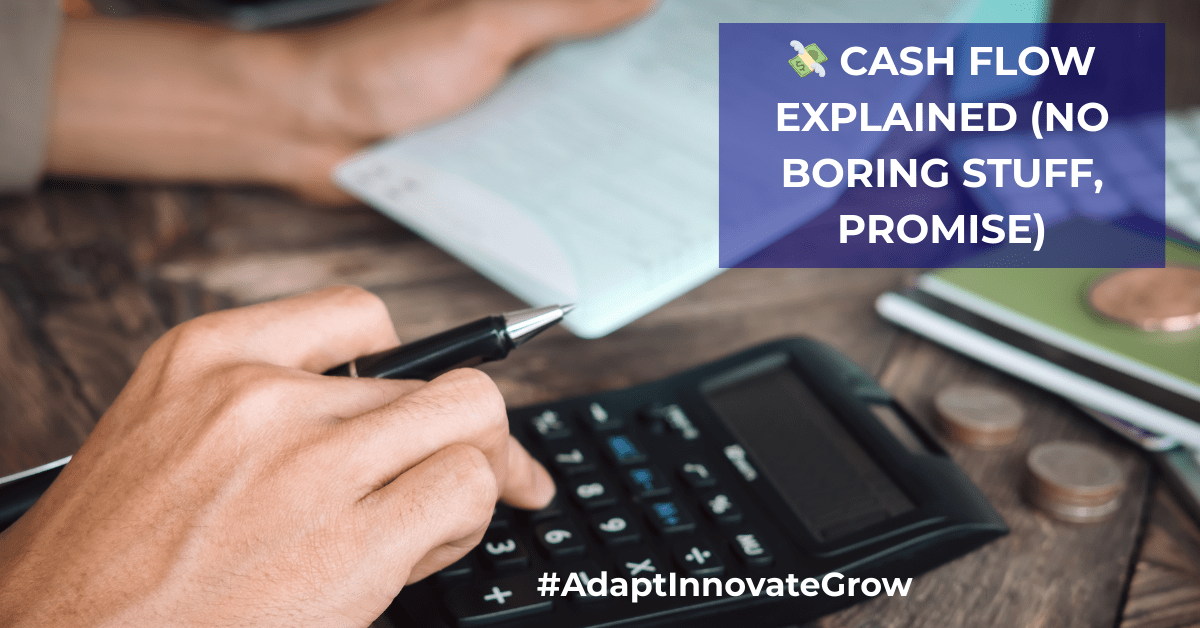
Ever wondered why your bank asks for a cash flow statement and not just your profit and loss? It’s simple: profit doesn’t pay your bills.
It’s possible to show a profit on paper and still not have enough money in the bank. And when that happens, your business can quickly grind to a halt.
I’ve been there myself. On paper, the business looked profitable. But in reality, cash was tight. I remember the pressure of wondering if I could cover wages or supplier payments that week. That experience forced me to take a closer look at how money was actually moving in and out of the business. The changes I made didn’t just improve cash flow — they gave me peace of mind.
📊 Profit vs. Cash Flow
Here’s the difference in plain terms:
Profit = Revenue – Expenses.
It’s the accountant’s scorecard.
Cash Flow = Money moving in and out.
It’s what actually keeps your business alive.
You can look profitable but still run into trouble if:
- Customers take too long to pay.
- You’ve got too much money tied up in stock.
- Large bills land before income comes in.
Profit may look good in reports, but cash flow is what allows you to pay staff, suppliers, and keep the doors open.
⚠️ Why Cash Flow Matters
Cash flow is more than just numbers on a spreadsheet — it’s the day-to-day reality of your business.
- It pays today’s bills. Suppliers, landlords, and staff want real money, not a profit margin.
- It funds growth. Without cash, you can’t invest in stock, staff, or marketing.
- It keeps you safe. Healthy cash flow is your cushion when unexpected costs arrive — from tax bills to urgent repairs.
Think of it this way: cash flow is the heartbeat of your business. Profit is just the health check. Both matter, but without the heartbeat, the business doesn’t survive.
✅ The Steps I Took
When I realised I had to get on top of cash flow, here’s what I did:
- Set payment times for suppliers and contractors.
I aligned outgoing payments with the periods when money was coming in. - Built a simple spreadsheet for monthly expenses.
Especially direct debits. This gave me visibility and eliminated nasty surprises. - Prioritised payments.
I decided who had to be paid immediately and where I could negotiate extra time. - Reduced stock holdings.
I cut stock levels from six weeks down to four weeks to align better with our income cycle. This freed up thousands of pounds that would otherwise have been sitting on the shelf.
The Results
These changes gave me:
- Peace of mind 🙌
- No more surprise bank debits
- Greater supplier confidence 🤝
- Better knowledge of my business
- Improved oversight and planning
- Stronger stock control 📦
Small, steady adjustments made a huge difference.
💡 The Mindset Shift
The biggest lesson? Stop thinking only in terms of profit and start thinking about cash.
Profit is a snapshot of the past. Cash flow tells you what’s happening right now and what’s coming next. With that shift, I started to:
- Buy stock more wisely.
- Plan ahead for quieter months.
- Spot issues early and act before they became problems.
🔥 Final Thought
Profit is important, but cash is survival.
Plenty of businesses close not because they weren’t profitable, but because they ran out of cash. If you want to grow, protect your cash flow. Treat it like the lifeblood of your business — because it is.
🌍 Start & Scale Community
📢 Ready to scale smarter, not harder?
Join our community of entrepreneurs who are learning to adapt, innovate, and grow together. 👉 Click here to join us